Kilimanjaro
The Kilimanjaro packing list, written by people who carry it
Exactly what to bring for a Kilimanjaro climb, what to hire in Arusha rather than buy, and the few items that decide whether summit night is bearable.
There are two ways to get the Kilimanjaro kit list wrong. The first is turning up underdressed for a mountain that reaches −15°C at dawn. The second — much more common — is spending two thousand dollars in an outdoor shop on equipment you will use once and then store in a loft for a decade.
Most of what you need can be hired in Arusha or Moshi for a few dollars a day, and the quality is generally decent. Below is what genuinely matters, what to hire, and the handful of items where it is worth spending your own money.
The three things that actually decide your comfort
If you get nothing else right, get these right.
1. Boots you have already worn
Waterproof, above the ankle, and broken in over at least a hundred kilometres before you fly. Blisters on day two of a seven-day climb are miserable and entirely avoidable. This is the single item you should never hire and never buy new for the trip.
2. A sleeping bag rated to −10°C or lower
You are sleeping at up to 4,673m. A summer bag will leave you awake and shivering, and sleep is part of how your body acclimatises. Hire one in Arusha if you do not own one — it is one of the cheapest and most useful things to rent.
3. Layers, not a single thick coat
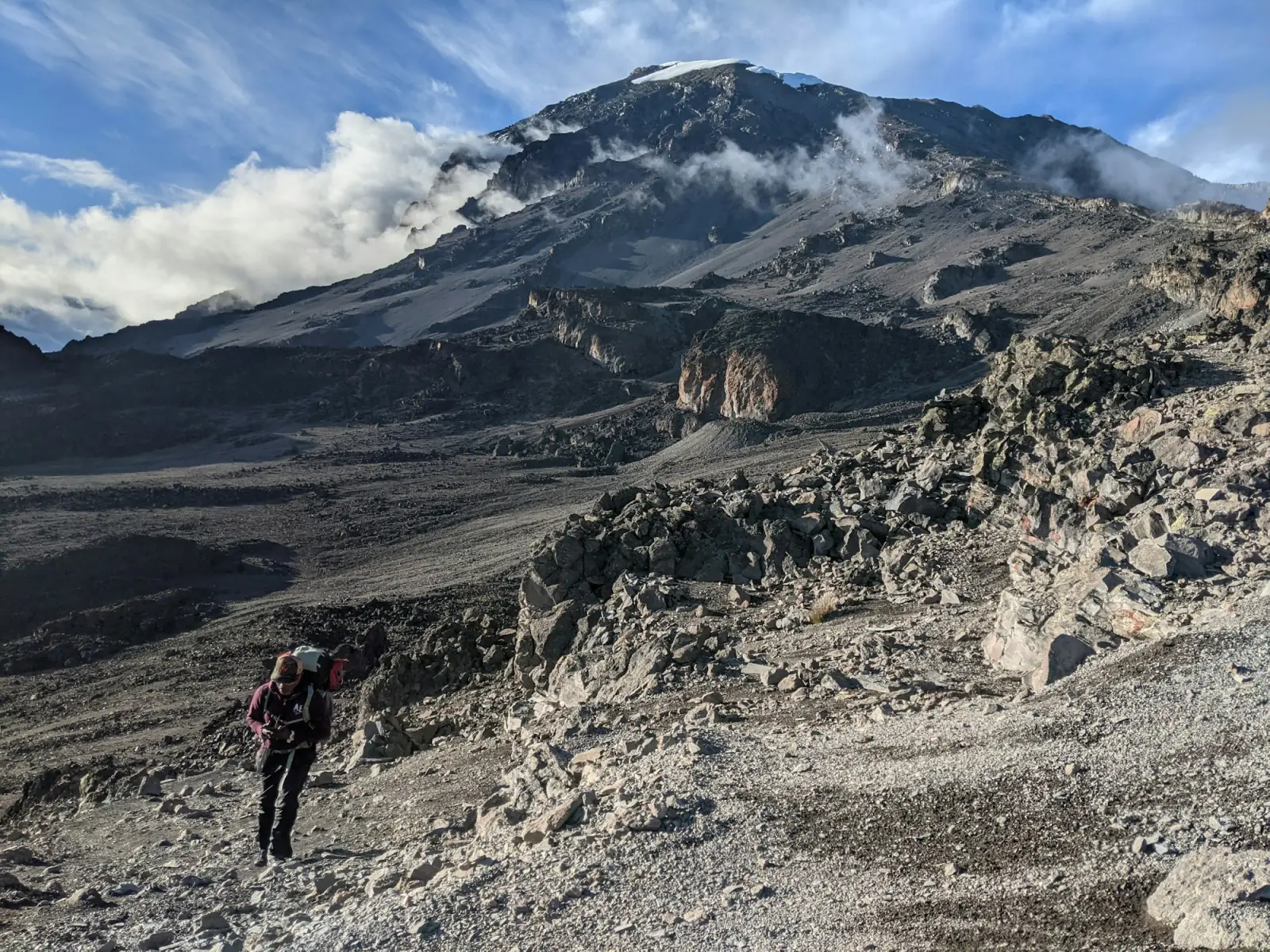
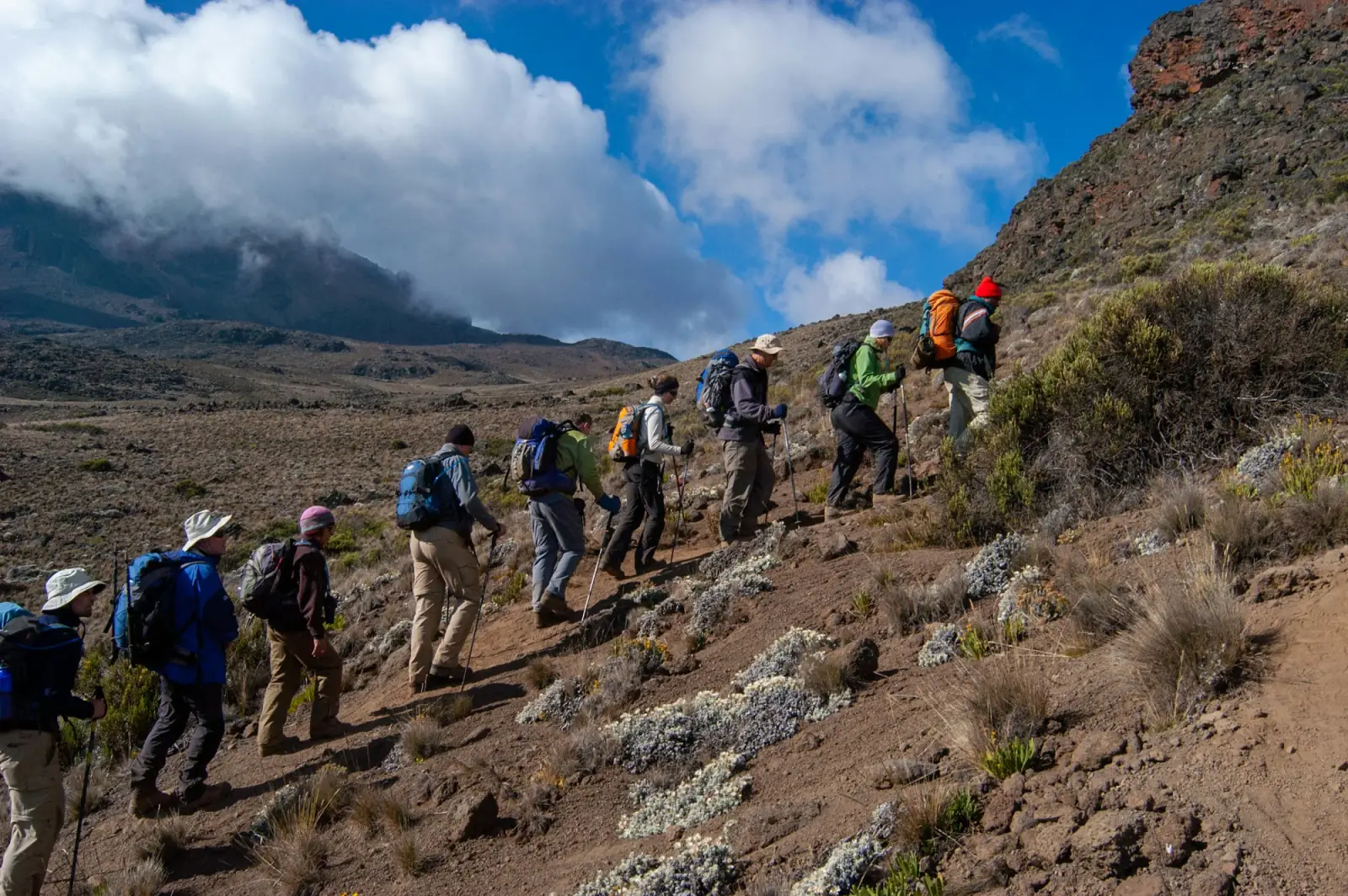
You will pass through rainforest at 25°C and arctic conditions at −15°C in the same week, often on the same day. The system that works is a thermal base layer, a fleece or soft-shell, an insulated down jacket and a waterproof shell — added and removed as you go.
The full list
Upper body
- 2–3 thermal base layer tops, merino or synthetic — never cotton
- 2 long-sleeve trekking shirts
- 1 fleece or soft-shell mid layer
- 1 insulated down jacket (hire this)
- 1 waterproof, breathable shell jacket with a hood
Lower body
- 2 pairs of trekking trousers, ideally quick-drying
- 1–2 thermal base layer bottoms
- 1 pair of waterproof over-trousers
- Underwear for the week, plus one thermal set kept dry for summit night
Extremities — where people suffer
- 3–4 pairs of wool trekking socks, plus one thick pair reserved for summit night
- Liner gloves and insulated outer gloves or mittens — mittens are warmer
- A warm hat that covers your ears, and a buff or neck gaiter
- A sun hat with a brim
- Category 3 or 4 sunglasses. The glare on the glacier is severe
- Gaiters, mainly for the scree on the descent
Equipment
- Daypack, 30–35 litres, with a rain cover — this is what you carry
- Duffel bag up to 15kg — this is what your porter carries
- Two 1-litre water bottles plus a hydration bladder. Bladders freeze on summit night, bottles do not
- Trekking poles. Your knees will thank you on the 2,800m descent
- Head torch with spare batteries. Cold flattens batteries fast, so keep spares in an inside pocket
- A power bank — there is no charging on the mountain
Personal
- Sun cream, factor 50, and a high-factor lip balm. You are close to the equator and very high up
- Personal first aid: blister plasters, painkillers, rehydration salts, any prescriptions
- Wet wipes and hand sanitiser — there are no showers
- Snacks you actually like. Appetite disappears at altitude and familiar food helps
What to hire rather than buy
Down jacket, sleeping bag, trekking poles, gaiters, waterproof over-trousers and a duffel bag. Between them that is easily $600–1,000 of purchases, and perhaps $50–70 of hire for the week. Tell us what you already own and we will send you an honest list of what to rent.
What people bring and regret
- Jeans and cotton. They soak, they stay wet and they steal your body heat.
- Brand-new boots. See above.
- Too much camera equipment. A heavy body and three lenses stops being a good idea somewhere around 4,000m.
- A suitcase. Porters carry soft duffels. Rigid cases are not practical.
Summit night, specifically
You will leave base camp around midnight in temperatures well below freezing, walking very slowly for six to eight hours before sunrise. Slow walking generates little heat, so wear everything you own: base layer, fleece, down jacket, shell, thermal bottoms, trousers, over-trousers, two pairs of socks, mittens over liners, hat and buff. Keep your water bottles upside-down in your pack so the ice forms away from the lid, and put spare batteries and a snack somewhere warm against your body.
Get that right and summit night is hard but manageable. Get it wrong and it becomes the longest night of your life.