Safari
Witnessing the Great Migration: where to be, and when
How the wildebeest migration actually moves through the Serengeti across the year, where to stay in each season, and the truth about river crossings.
The Great Migration is not an event you can book a ticket to. It is a continuous, year-round circuit of roughly 1.5 million wildebeest and a quarter of a million zebra around the Serengeti–Mara ecosystem, driven by rainfall and grass. There is no month when it is not happening. The only question is where.
How it actually works
The herds follow the rain. Short-grass plains in the south are rich in the minerals wildebeest need for calving, but they dry out fast, so the animals move north and west as the season turns, then return when the rains do. It is a loop, and it is not perfectly punctual — a late rainy season moves everything by weeks.
Any operator who tells you exactly where the herds will be in eleven months' time is guessing. What we can do is put you in the right region for the right month and give you the best odds.
December to March — calving on the southern plains
Where: Southern Serengeti and the Ndutu area.
Around half a million calves are born in a concentrated six-week window, mostly in February. It is the densest wildlife spectacle in Africa and, because newborn calves are the easiest prey on the continent, predator activity is extraordinary — lion, cheetah, hyena and wild dog all working the same plains.
For many people this beats the river crossings. It is more reliable, less crowded and there is far more actually happening.
April to May — the long rains
Where: Moving north and west through the central Serengeti.
The herds begin drifting towards the Western Corridor in long columns. Access is harder and some camps close, but the country is green and empty and prices are at their lowest of the year.
June to July — the Grumeti
Where: Western Corridor and Grumeti River.
The herds mass along the Grumeti, where the crossings are less famous than the Mara's but the crocodiles are the largest in Africa. Late June and July is an excellent, comparatively quiet window with genuine drama.
August to October — the Mara River
Where: Northern Serengeti, around Kogatende.
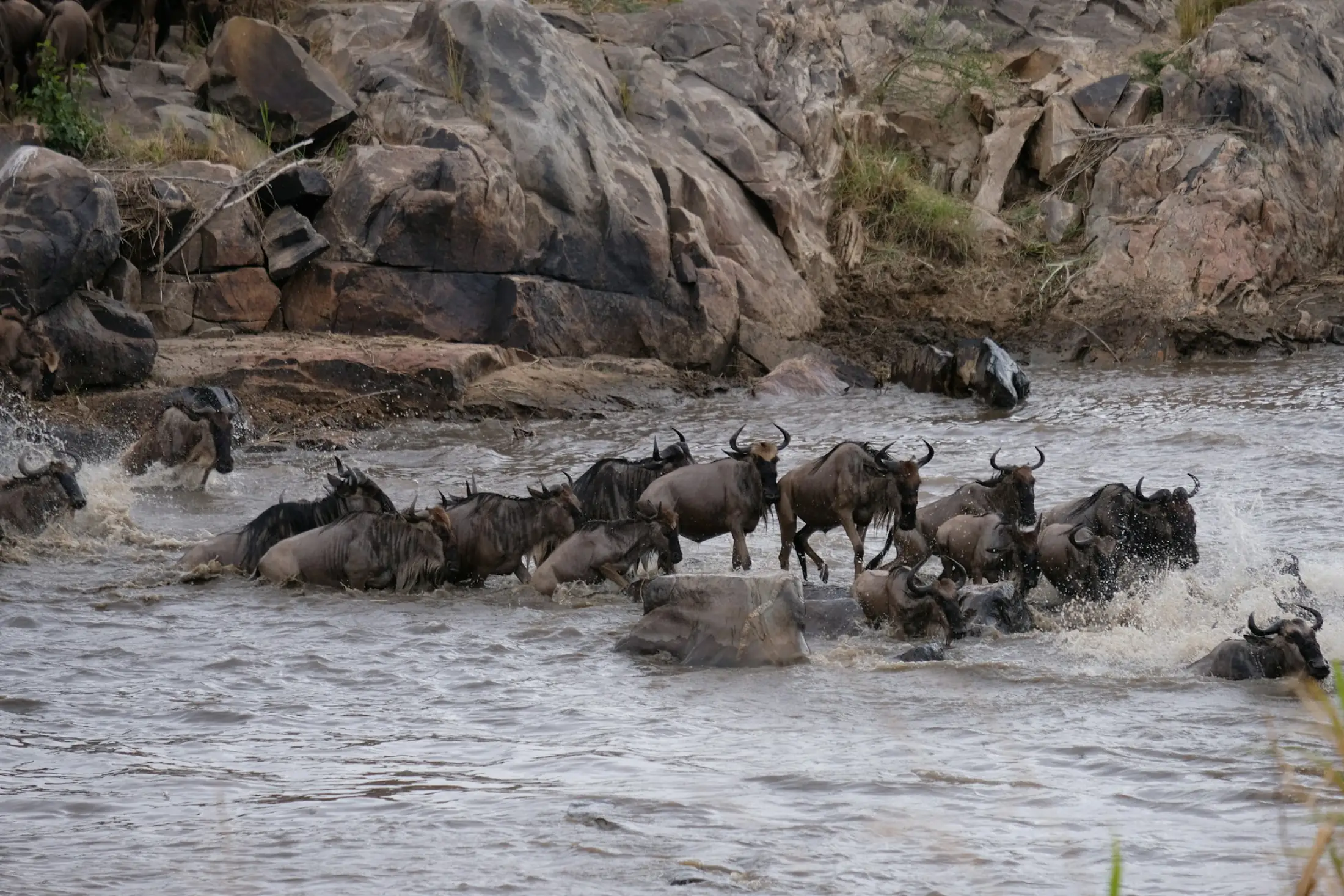
These are the images everyone knows: thousands of animals piling down a bank into crocodile water. Two things worth being clear about. First, the crossings happen on the Tanzanian side of the Mara River too — you do not need to be in Kenya. Second, they are genuinely unpredictable. Herds may sit at the bank for three days and then cross at four in the afternoon, or not at all.
Our advice: if crossings are your priority, budget at least three nights in the northern Serengeti between mid-August and mid-October, and go in willing to be patient. Treat a crossing as a bonus rather than the point of the trip and you will have a far better week.
November — turning south
Where: Moving south through the eastern Serengeti.
The short rains pull the herds back towards the southern plains. Quiet, green, good value, and the migration is visibly on the move.
Practical planning
- Book early for August–October. Northern Serengeti camps sell out nine to twelve months ahead.
- Stay mobile. Mobile tented camps move with the herds each season and are almost always better positioned than permanent lodges.
- Fly one leg. Arusha to the northern Serengeti is a very long drive. Flying in and driving out saves a full day for a modest cost.
- Give it enough nights. Two nights in the Serengeti is not enough to find a migration. Three minimum, four is better.
- Combine it. Tarangire and Ngorongoro complement the Serengeti and are excellent regardless of where the herds happen to be.
An honest word
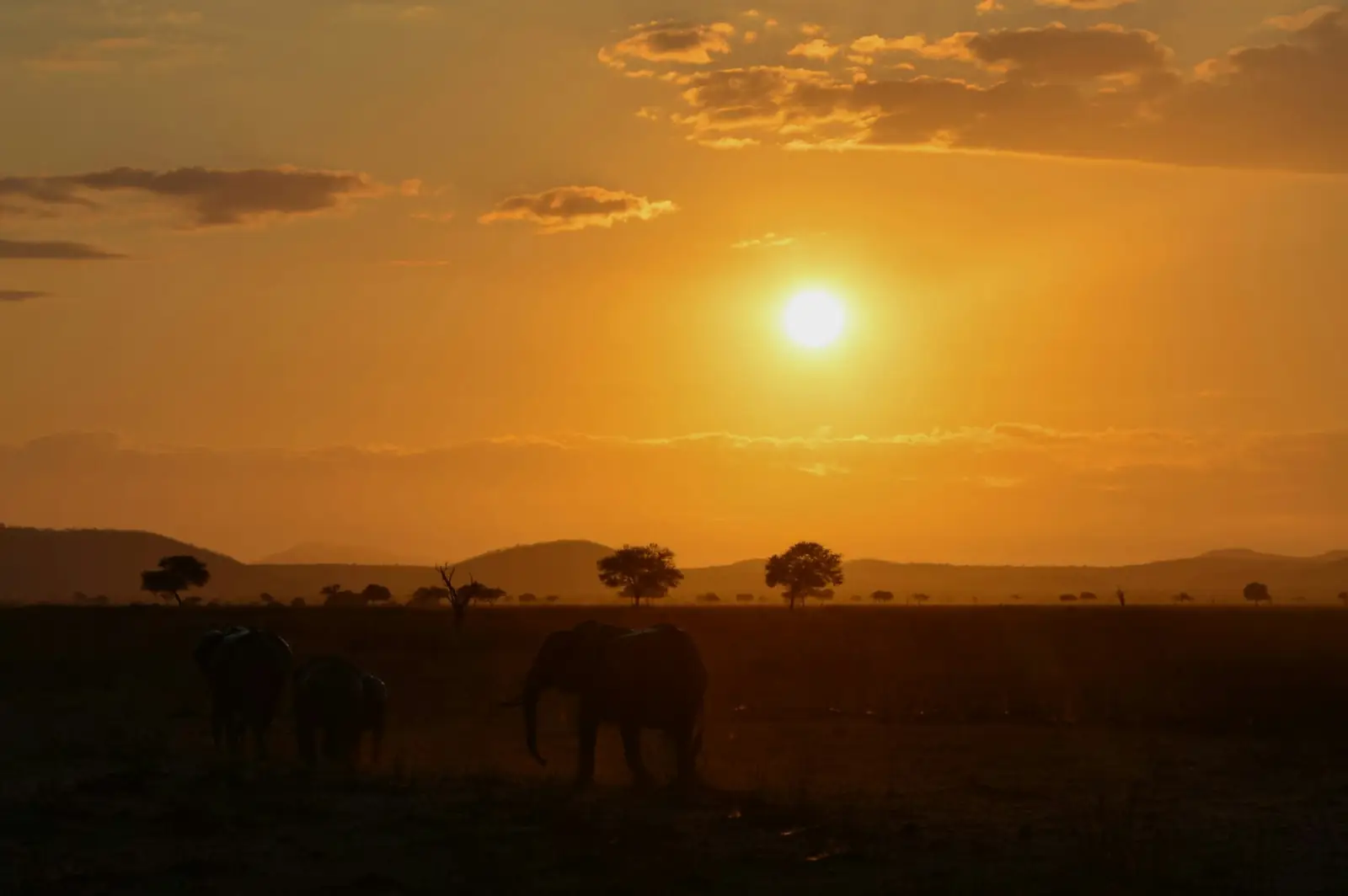
The migration is remarkable, but it is not the only reason to come to the Serengeti, and building an entire trip around a river crossing is a good way to end up disappointed by an otherwise superb week. Resident game — lion, leopard, cheetah, elephant, giraffe — is excellent year-round. Come for the ecosystem, and let the herds be the part you cannot control.