
Day 1 & 4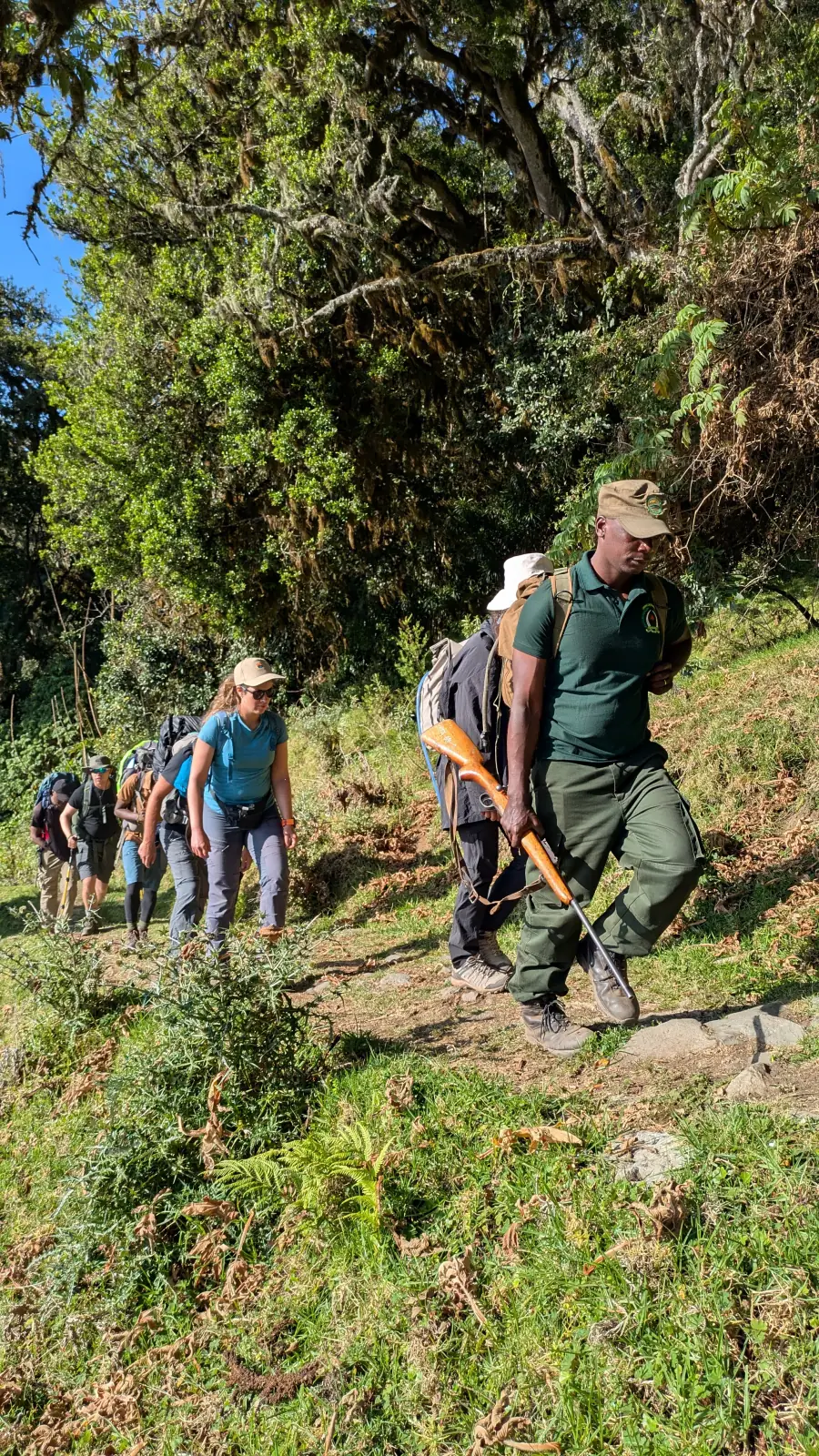
A ranger walks with you
Momella Gate sits inside Arusha National Park, and giraffe, zebra, warthog and buffalo are ordinary sightings on the approach. That is precisely why an armed ranger accompanies every group on foot.
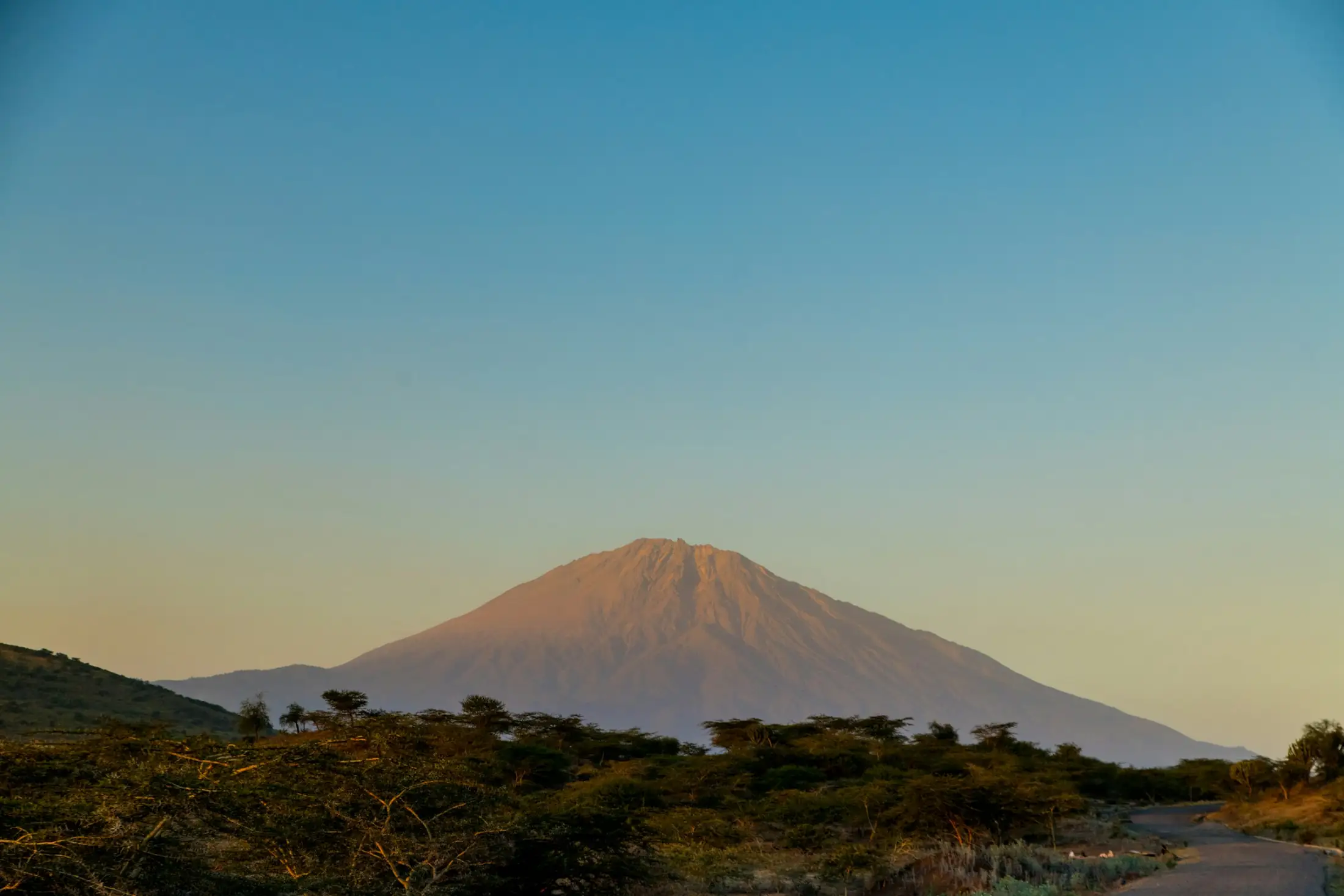
Arusha National Park · 4,566m
Meru sits an hour from our front door and is climbed by a fraction of the people who climb Kilimanjaro. It is a proper mountain, a genuinely wild park, and strong preparation for Uhuru Peak.
Why Meru

Mount Meru is Tanzania's second summit and the fifth highest in Africa. It is steep, it is high enough to matter, and it runs through a national park where you will meet buffalo and giraffe on the path rather than at a viewpoint.
What it is not is a technical climb. There are no ropes and no mountaineering skill required — the difficulty is the gradient and the altitude, and both are manageable if you are reasonably fit and take the four-day option. The trade for the shorter schedule is that Meru gains height faster than any Kilimanjaro route, so it asks more of you per day.
What you get
Most of our Meru clients are doing one of two things: fitting a real mountain into a short trip, or getting themselves ready for Kilimanjaro. It does both jobs well.
Fewer days, fewer park fees and a smaller crew. You get altitude, a summit and a certificate for roughly what four nights on Kilimanjaro would cost you in park fees alone.
Three or four days, start to finish, from Arusha. It slots either side of a safari without stretching a two-week holiday, which a Kilimanjaro climb cannot do.
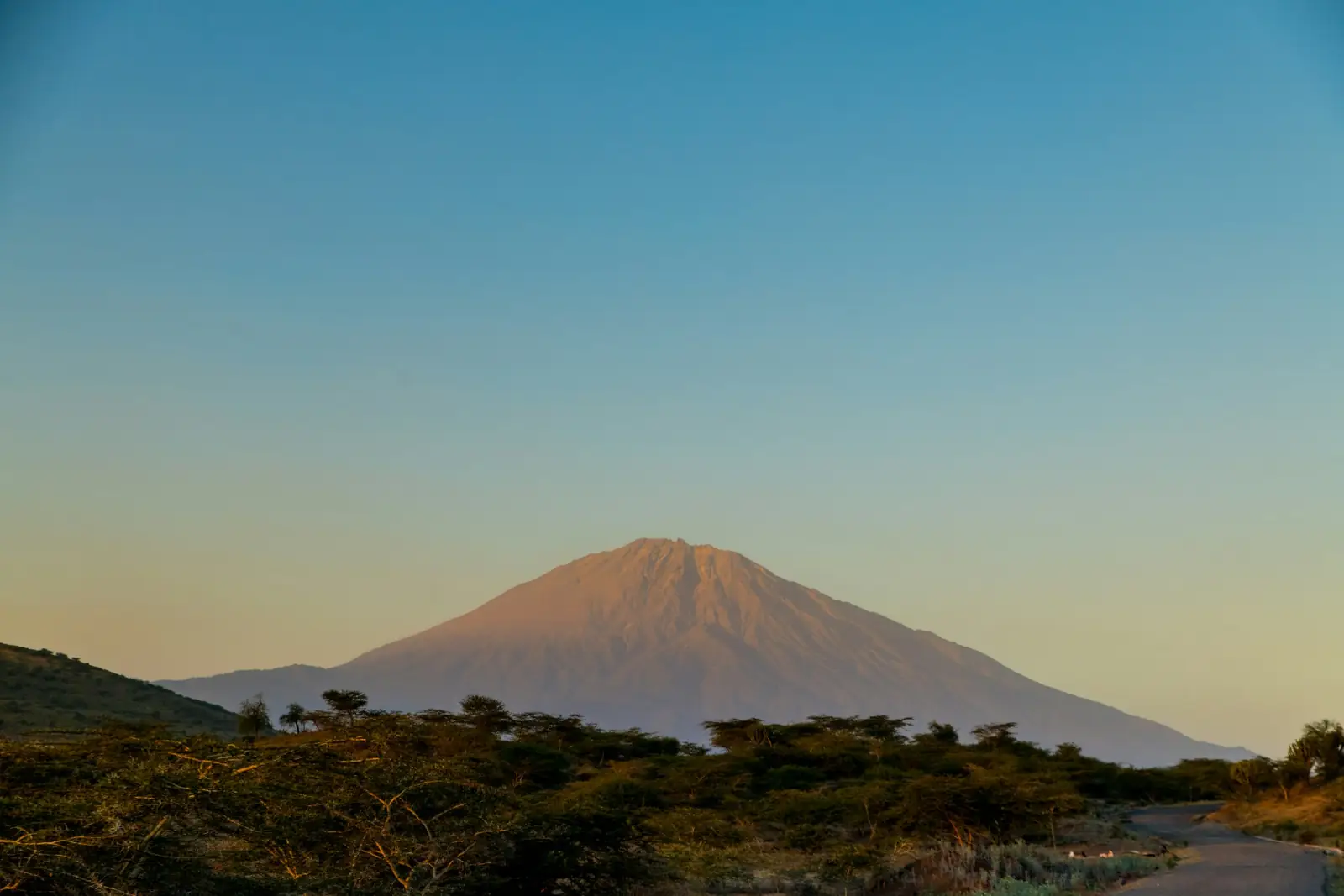
On a clear morning the summit ridge looks straight across to Kibo, floating above the cloud. It is a view of Kilimanjaro you cannot get from Kilimanjaro — weather permitting, which on any mountain it often does not.
The lower slopes are working national park. Colobus monkeys, buffalo and giraffe are ordinary sightings on day one, which is why a ranger walks with you.
On the mountain
Meru packs an unusual amount into a short trek — rainforest, moorland, a crater rim and a summit ridge, plus a park full of animals on the way in and out.
Momella Gate sits inside Arusha National Park, and giraffe, zebra, warthog and buffalo are ordinary sightings on the approach. That is precisely why an armed ranger accompanies every group on foot.
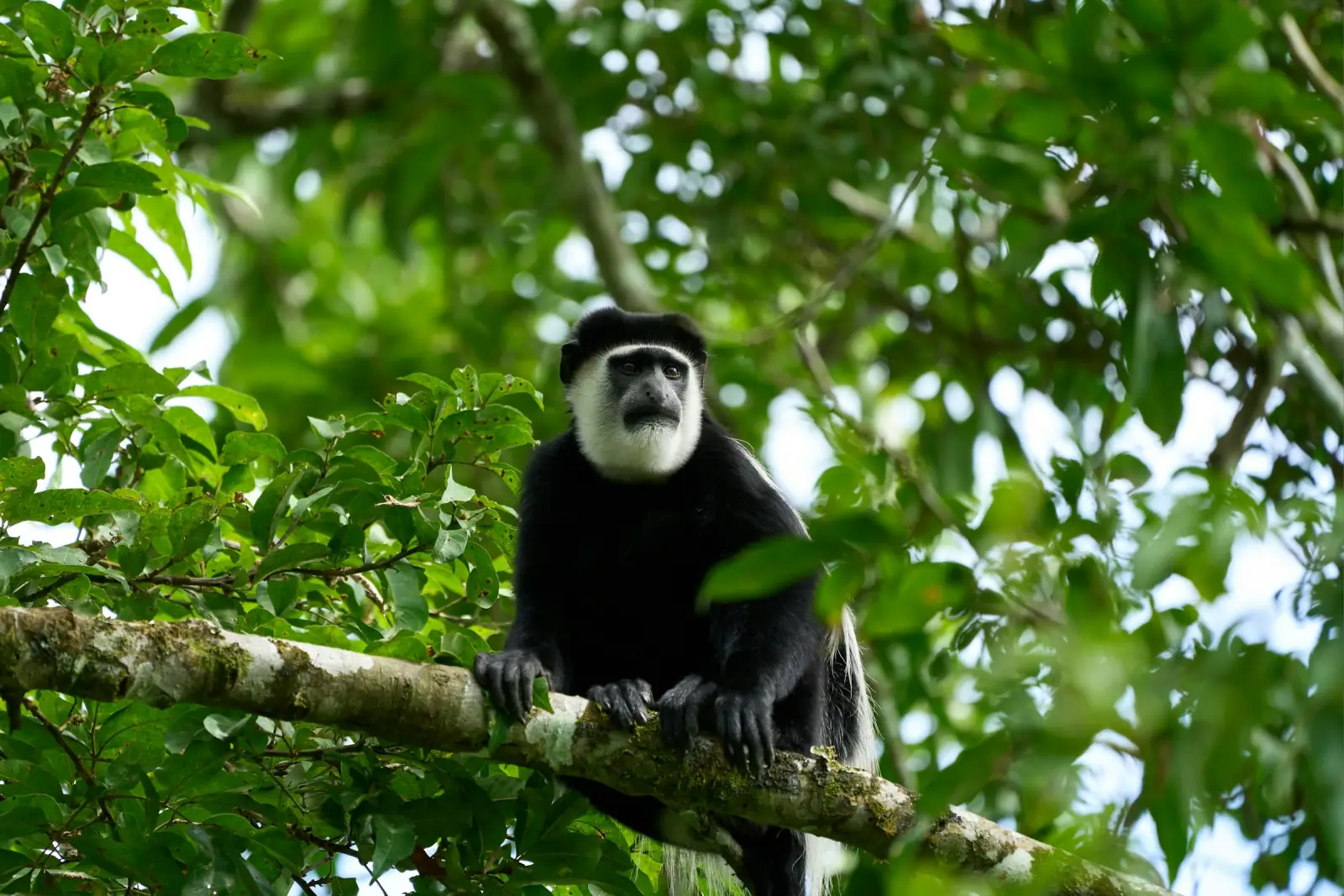
Black-and-white colobus and blue monkeys live in the forest belt, alongside more than four hundred recorded bird species. Bring binoculars if you care about either.
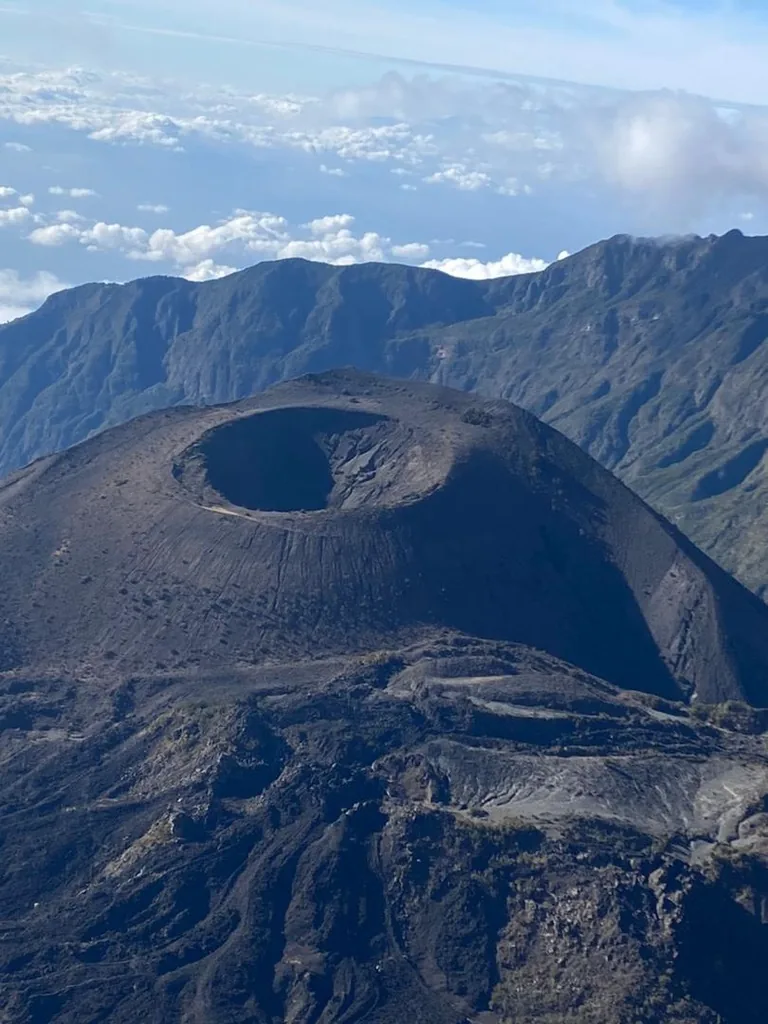
Meru's crater is a horseshoe, blown open on one side, with a young ash cone sitting inside it. The summit path runs around the rim with all of that dropping away beside you.
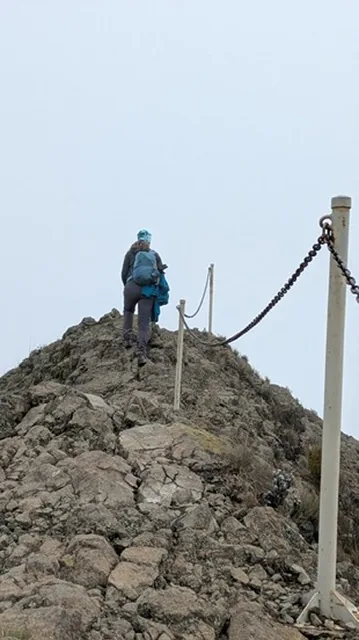
The final stretch is bare rock with a fixed chain in the steepest places. Hands out of pockets, but no ropes and no climbing skill — just care, and a head for the drop.
Day by day
This is the four-day version, which we recommend. The three-day option drops the Little Meru acclimatisation walk and pushes days two and three together — cheaper, harder, and a noticeably lower chance of reaching the top.
Ask about datesRegistration at the gate, then straight into the park on foot with your ranger. Open grassland first, where the game is, then into forest and past the crater waterfall. A gentle first day by design.
Steeper, through heather and giant lobelia, to the saddle between the two peaks. Drop your pack, then walk up Little Meru at 3,820m in the afternoon and come back down to sleep. Climb high, sleep low — the same logic as Kilimanjaro.
A midnight start along the crater rim, past Rhino Point and Cobra Point, on an exposed ridge with the ash cone falling away beside you. Sunrise on the summit, with Kilimanjaro across the cloud if the weather gives it to you. Then all the way back down to Miriakamba.
An easy descent through the forest, more game on the lower slopes, certificates at the gate and a transfer back to Arusha in time for a long shower.
The price
The four-day Momella route in a group of 4–10 people. This is the rate most clients pay.
The same four days trekking solo, or as a private group smaller than four. Fewer people to share the fixed park and crew costs.
Meru is one of the few Tanzanian mountains where the park fee is a large share of the cost, which is why the two rates differ as much as they do. Groups larger than ten are priced on enquiry. You get a written quotation listing exactly what is below before you pay anything.
Final cost confirmed in your written quotation.
From price based on 4–10 guests sharing. Private and smaller-group departures are available. Contact us for a tailored quotation.
The prices shown are starting prices for the itineraries and group sizes described. Your final cost is confirmed in a written quotation and depends on your dates, group size, season, and the park and conservation fees in force at the time. Tanzanian national park and conservation fees, fuel costs and exchange rates are set outside our control and change from time to time, so published prices are reviewed periodically. Once you accept a quotation and pay your deposit, your price is fixed — if government fees rise before you travel, we absorb the difference.
Before Kilimanjaro

Climb Meru first and you arrive at the Kilimanjaro gate already knowing three things: how your body handles 4,500m, what a summit night actually feels like, and whether your boots are the right ones.
Spending three nights above 2,500m starts the physiological work of acclimatisation, and the confidence matters as much as the physiology. A great many people turn back on Kilimanjaro not because they cannot walk any further, but because they have never felt altitude before and do not know whether what they are feeling is normal.
Being straight with you: Meru first improves your odds, it does not guarantee anything. Altitude affects the same person differently on different weeks, and no amount of preparation removes the risk of altitude sickness on a 5,895m mountain. Allow two or three rest days in Arusha in between, and speak to your doctor before booking either.
Is it for you
Meru suits more people than its reputation suggests, and it is honestly wrong for a few. Here is how we think about it when someone asks.
You want a real summit and the money will not stretch to Kilimanjaro. Meru gives you altitude, a certificate and a much better story than a day trip.
You have ten days for the whole of Tanzania and want a mountain in it. Four days on Meru leaves room for the Serengeti; nine on Kilimanjaro does not.
You have walked hills but never been above 3,000m. Meru is the sensible place to find out how you respond, on a mountain you can descend quickly.
No other major African trek has you on foot among giraffe and buffalo. If that combination appeals more than raw altitude, this is the one.
You have already booked Uhuru Peak and want serious preparation for it. Meru, then two or three days off, then the big one.
You want a gentle walking holiday. Summit night is ten hours on an exposed ridge with a steep drop beside you — it is short, but it is not easy.
Both mountains
Around two and a half weeks covers both properly, with real rest in between. This is the shape it usually takes.
Four days to Socialist Peak at 4,566m. Wildlife on the walk in, a summit ridge at dawn, and your first honest read on how you handle altitude.
In Arusha, at low altitude. Eat properly, sleep, get laundry done and let your legs recover. Skipping this is the most common mistake.
Six to nine days on the route that suits you, arriving part-acclimatised and knowing what to expect from a summit night.
Most people add the Serengeti or a few days in Zanzibar afterwards. After two summits you will have earned the beach.
Start planning
Tell us roughly when, how many of you there are, and whether Kilimanjaro is also on the list. Isack will come back to you with a day-by-day plan and an itemised price.
Enquiries are read Mon–Sat 8am–6pm and Sun 9am–4pm (EAT).